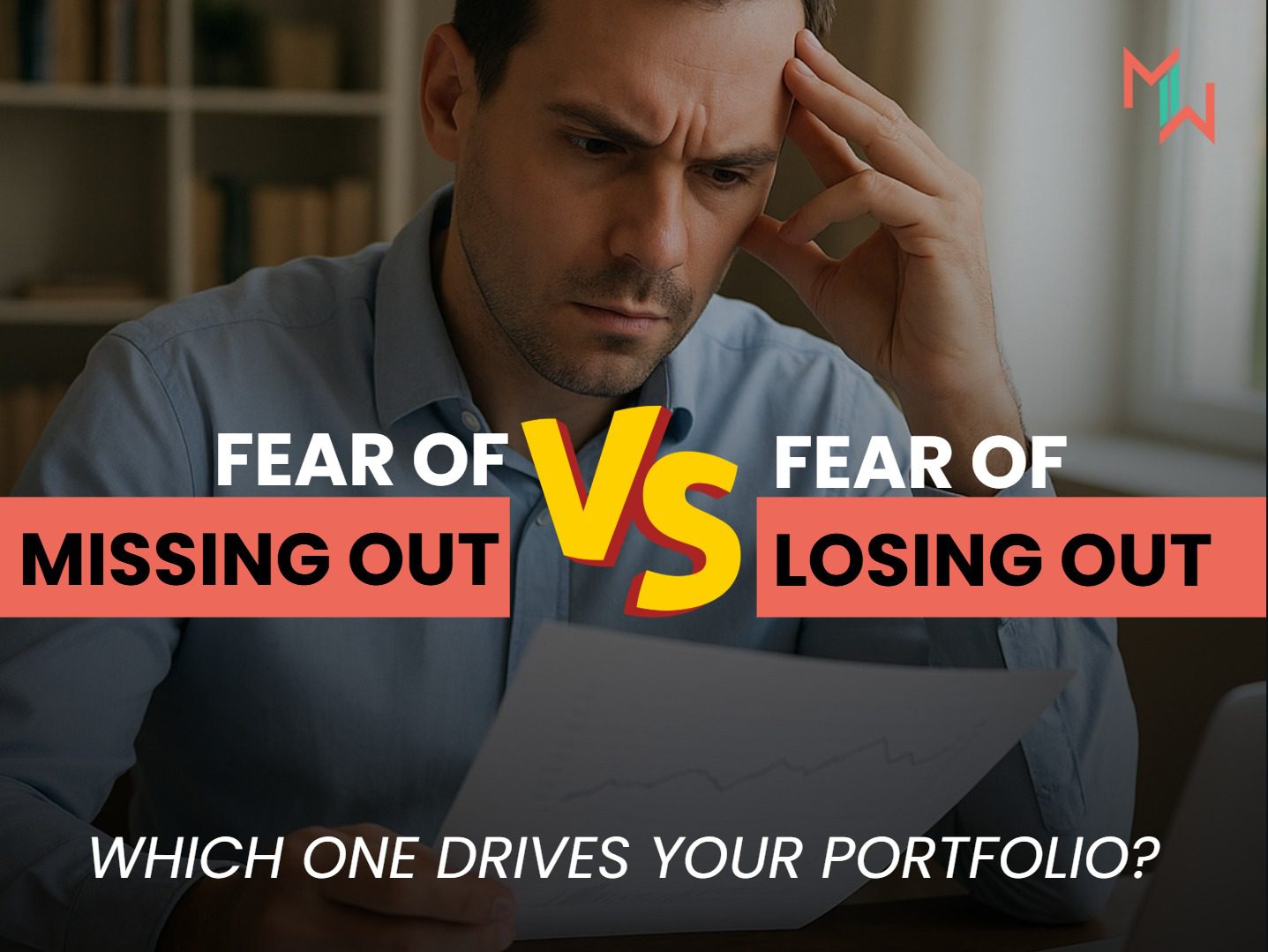
Investing isn’t just about numbers. It’s also about human behaviour.
While data and discipline build long-term wealth, emotions often shape the journey — especially two powerful forces known as FOMO (Fear of Missing Out) and FOLO (Fear of Losing Out).
Both can influence how investors respond to markets, but in very different ways. Understanding them can help you make decisions that are guided by logic, not impulse.
The Fear of Missing Out (FOMO): The Chase for Quick Gains
FOMO appears when markets are rising, success stories are everywhere, and it feels like everyone else is making money faster than you.
It’s that urge to “catch up” when:
- Friends or colleagues talk about their recent profits.
- Market headlines focus on record highs.
- You feel pressured to act before “it’s too late.”
Under the spell of FOMO, investors often rush into the latest performing category or fund, ignoring whether it fits their goals or risk profile.
However, by the time most people react to trends, prices have already run up — and any short-term correction can quickly turn enthusiasm into regret.
FOMO-driven investing is like joining a race after the sprint has started: you might move fast, but not in the right direction.
The Fear of Losing Out (FOLO): The Hesitation to Take Risk
While FOMO pushes investors toward the market, FOLO pulls them away.
It’s the anxiety that sets in during periods of volatility or negative news.
You might recognize FOLO when:
- You hold excessive cash, afraid the market might fall.
- You delay investing even when you have a long-term goal.
- You redeem your funds after a few months of underperformance.
FOLO feels safe in the moment — but often comes at the cost of long-term growth.
By staying out of the market, investors miss the recovery phases that usually follow corrections. The result? Lost opportunities for compounding and wealth creation.
The Emotional Tug of War
Most investors experience a constant push and pull between these two emotions.
- FOMO fuels overconfidence and hasty decisions.
- FOLO feeds caution and inaction.
In both cases, the outcome is the same — decisions driven by emotion rather than evidence.
The key is to find balance. Successful investing lies not in reacting to every market movement, but in trusting a disciplined, goal-based strategy.
How to Keep Emotions in Check
1. Define your investment goals clearly.
When you invest with purpose, short-term fluctuations become less intimidating.
2. Stick to a systematic approach.
Regular investing through SIPs ensures you buy more units when markets are low and fewer when they’re high — automatically balancing risk.
3. Diversify wisely.
A well-structured mix of equity, debt, and hybrid funds helps smoothen returns and reduces emotional stress.
4. Consult your financial advisor.
An advisor helps you view market events in context, separating noise from signal and keeping you aligned with your long-term plan.
Conclusion
FOMO and FOLO are two sides of the same emotional coin — one tempts you to chase returns, the other stops you from participating at all.
The most successful investors are not those who avoid emotion, but those who recognize it and stay disciplined despite it.
In the long run, patience, consistency, and clarity of purpose matter far more than timing the market or following the crowd.
After all, true wealth isn’t built on fear — it’s built on focus.