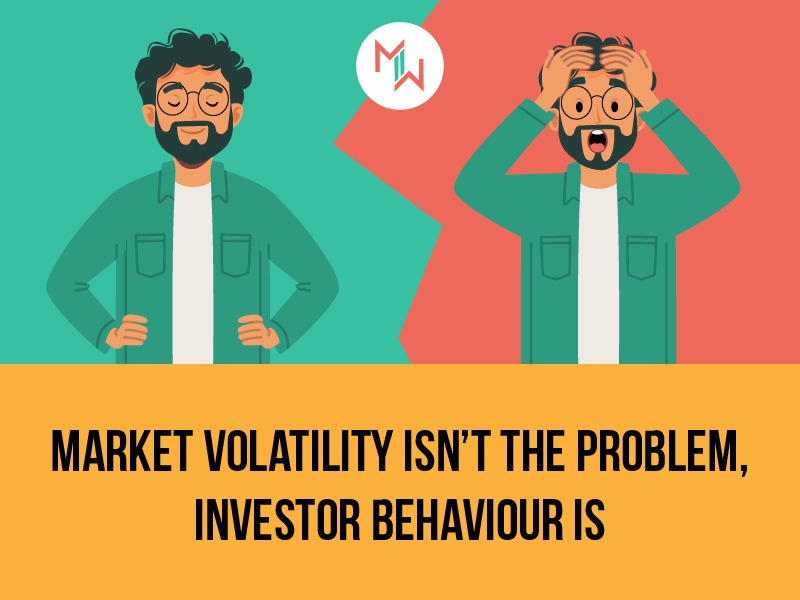
You can’t control the markets, but you can control how you react to it
During periods of geopolitical tension, markets tend to be volatile. But more than the markets, it is often investor confidence that gets shaken. Uncertainty brings anxiety, and with it comes a flood of thoughts on whether to sell, whether further losses are in store, or whether wealth built over time could erode.
In such phases, navigating markets doesn’t require a complex skillset. What matters more is the ability to stay calm and disciplined. Long-term wealth is not created by picking the perfect fund/stock or timing the market, but it is built through patience, consistency, and behaviour.
In this blog, we’ll look at 5 behavioural biases that often cause investors to lose money.
Loss Aversion
US bombing Iran… markets fall over 10 per cent from its January 2026 high… … and suddenly it feels like our portfolio is under attack too.
You bought a stock at ₹100. It falls to ₹90. Instead of thinking long-term, your mind says: “Sell now before it becomes ₹80.”
So you sell at ₹90.
But what happens next? It recovers to ₹110.
In trying to avoid further loss, you end up booking it.
That’s loss aversion; losses hit harder than gains, even when the gains are bigger.
In volatile times, this fear makes investors exit at exactly the wrong time.
Herd Mentality
When markets fall, the mood turns negative everywhere – from office conversations to WhatsApp group chats.
You didn’t plan to sell, but you start feeling maybe you should also exit before it falls more.
You feel like
“Maybe they know something I don’t.”
And you follow the crowd.
Recency Bias
Last 2 weeks:
War news → market down → oil up → negative headlines
Now your brain says:
“The market will keep falling”
So, you wait.
Nifty moves from 26,000 to 23,000 levels
And you wait for 20,000
Instead, it bounces back
This is recency bias, which assumes that what just happened will keep happening.
But markets don’t move in straight lines. Even during wars, markets have often stabilised and recovered faster than expected
Here’s something interesting:
During COVID, markets crashed sharply in just 2 months, but the recovery happened even faster, with strong gains in the next 7–8 months.
And most investors missed it.
Overconfidence Bias
You sold before the fall, and you start thinking you made a good call at the right time.
Now, your confidence goes up:
“I can time this market.”
You wait to buy lower.
The market doesn’t give you that chance.
Then you buy higher.
Then again, try to sell before next fall.
End result?
More activity, less return.
In reality,
Consistently timing the market is difficult, even for experienced fund managers and seasonal investors. So, expecting to get it right every time can be truly impossible.
Confirmation Bias
You believe:
“The market will fall more because of war”
Now what do you do?
- You read only negative news
- You ignore positive signals
- You listen only to bearish opinions
Your belief becomes stronger not because it’s right, but because you’re filtering information.
Meanwhile, the market stabilises… slowly recovers…
And you’re still waiting for the crash.
This is confirmation bias – not seeing the full picture.
Markets don’t move on one narrative. They move on multiple factors and ignoring that costs opportunities.
Thus, we can’t control the market, but we can control how we respond to it. Over the years at Milestones2Wealth, we have helped investors stay disciplined through uncertainty, protecting their wealth and keeping them on track toward their financial goals. Do you wish to start your Milestones2wealth journey? Reach out to us today!